
We've become desensitised to the suffering of greyhounds.
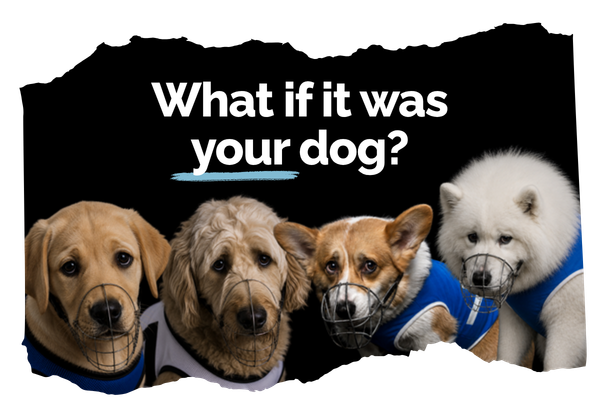
We see them on the track, on the TV at the pub, and we don't question why this poor breed specifically has to suffer for the entertainment of punters.
Many different dog breeds love running and chasing, and yet, greyhounds have become the trophy breed for racing.
What if it was your dog in this position?
It’s a confronting question, but it’s the one we need to ask.
Every year in South Australia, thousands of greyhounds are forced into an industry where serious injury, suffering, and even death are not rare accidents - they are built into the system. And if it wouldn’t be acceptable for your own dog, why is it acceptable for them?
Imagine your dog spending up to 23.5 hours a day confined in a kennel barely wider than their body. Imagine them with little enrichment, little socialisation, and no chance to simply be a dog.
Imagine knowing that if they slowed down, got injured, or stopped “performing”, their value - and the care they receive - could drop overnight.
Would you ever choose that life for them?
Yet this is the reality for many greyhounds in the racing industry. Despite years of promised reforms, the same entrenched welfare issues continue: major injuries every month, inadequate housing, missing safeguards, and a lack of transparency that leaves the public unable to see what really happens to these dogs.
The 2023 South Australian Inquiry into Greyhound Racing revealed conditions no dog should endure - cramped kennels, poor hygiene, inadequate bedding, exposure to weather and pests across several different case studies.
And still, there is no complete birth‑to‑death tracking system. We simply do not know what happens to many unraced and retired greyhounds once they leave the industry.
Some greyhounds are well cared for, but the evidence is overwhelming: many are not.
And with the number of total injuries increasing – not decreasing – in SA, it’s clear that no amount of reform can make racing safe. The risks are inherent. The suffering is ongoing. The industry has lost its social license.
RSPCA South Australia is calling for a managed phase out of greyhound racing - a responsible, compassionate transition that protects dogs and supports people in the industry.
Because welfare cannot be guaranteed. Because transparency is still missing. Because after years of inquiries and promises, the same problems persist.
Most importantly, because greyhounds don’t have a choice. But we do.
If it’s not ok for your dog, it’s not ok for greyhounds. Stand with us for a kinder future. Learn more via our Education Hub, take action here, and help phase out greyhound racing in South Australia.
Where to now?
Greyhound racing is not economically essential to South Australia. A managed phase out would protect dogs while supporting those in the industry through the transition.
Greyhounds don’t have a voice, but you do. Please write to decision‑makers and help build awareness.
You can also sign up to Changemakers to stay informed and be part of this important campaign.
Meaningful change is possible, but only if we choose it.
Rest In Peace – Galloping Suzie
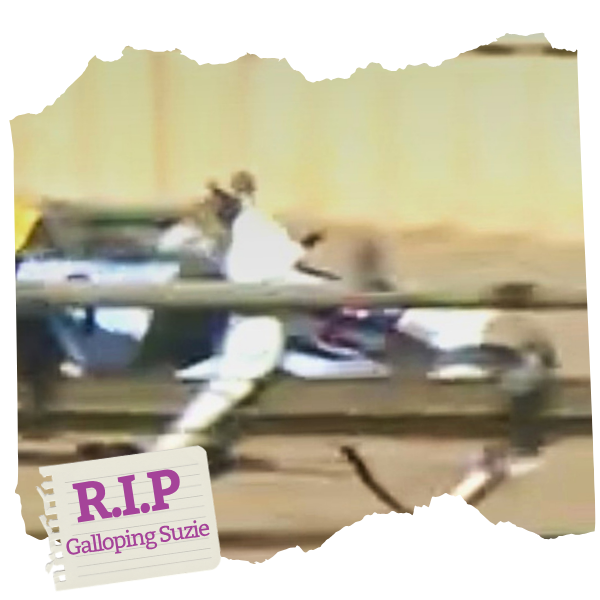
Image: Coalition for the Protection of Greyhounds
And then there are individual stories that cut through the statistics.
On 2 April, Galloping Suzie lost her life at the Warragul raceway in Vic.
Galloping Suzie, nearly five years old and running her 100th race, broke her left radius and ulna after faltering off the back straight. The race video was never uploaded. She was euthanised by the on‑track vet, becoming one more older, heavily raced greyhound lost to the industry.
Another life lost. Another dog whose final moments were spent in fear and agony.